

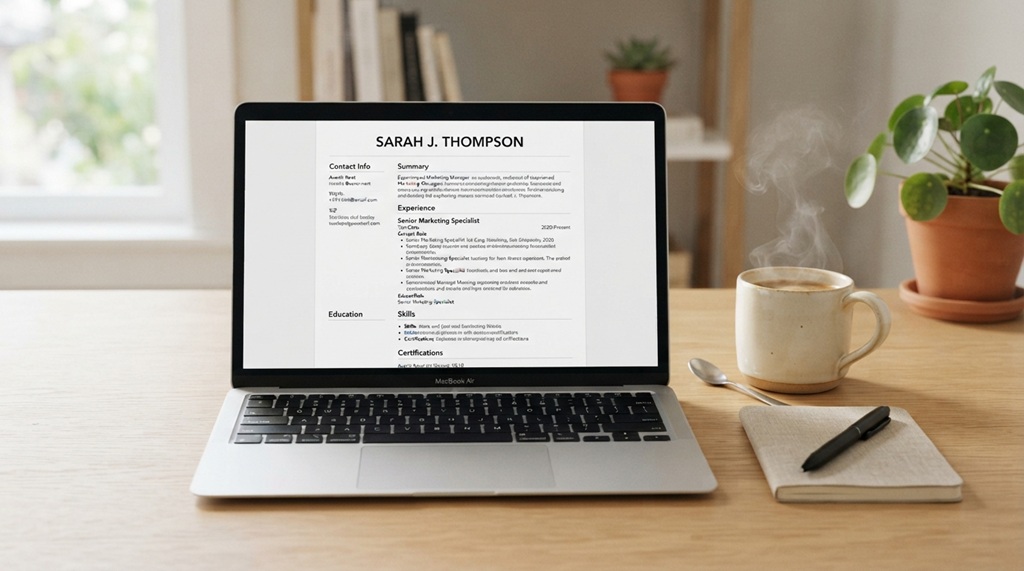
A killer resume is one that gets you an interview within the first 10-15 seconds a recruiter spends looking at it. That’s not an exaggeration most hiring managers skim before they read, so your resume has to prove your value instantly, not eventually. If you’re a young adult entering the job market, switching careers, or applying for your first “real” role, this guide will show you exactly how to build a resume that works.
The good news is that a strong resume isn’t about fancy design or stuffing it with buzzwords. It’s about clarity, relevance, and proof. You don’t need ten years of experience to write one that gets noticed you need the right structure, the right words, and a clear sense of what the employer is actually looking for.
By the end of this article, you’ll know how to format your resume, what to include (and cut), how to beat applicant tracking systems, and how to make even limited experience sound impressive and credible.
Start With the Right Resume Format

The right format depends on your experience level, and choosing the wrong one is one of the fastest ways to get overlooked. Most young adults should use a reverse-chronological format it’s what recruiters expect and what ATS software reads most easily.
When to Use a Chronological Resume
Use this format if you have at least some relevant work experience, even part-time jobs, internships, or volunteer roles. It lists your most recent position first and works backward, showing growth and consistency over time.
When to Use a Skills-Based or Hybrid Resume
If you’re a student, recent graduate, or changing industries with little direct experience, a hybrid format works better. It leads with a skills or “core strengths” section, followed by a shorter work history. This lets you highlight transferable skills communication, project management, problem-solving before an employer notices any gaps in formal experience.
Whichever format you choose, keep it to one page unless you have over 8-10 years of experience. Recruiters spend very little time on each resume, and a cluttered two-pager often works against you rather than for you.
Write a Strong Summary Statement (Not an Objective)
A resume summary should tell the employer who you are and what value you bring in 2-3 sentences, placed right at the top. Skip the old-school “objective statement” that talks about what you want employers care more about what you can do for them.
A good summary answers three questions quickly:
- What’s your role or field?
- What’s your key strength or achievement?
- What kind of value do you bring to this specific job?
For example, instead of writing “Seeking an entry-level marketing position to grow my skills,” try: “Marketing graduate with hands-on social media campaign experience, skilled in content creation and analytics, looking to help brands grow their digital presence.”
This small shift from what you want to what you offer instantly makes your resume feel more professional and outcome-focused.
Focus on Achievements, Not Just Duties
The biggest resume mistake young job seekers make is listing job duties instead of results. A duty tells the employer what you were supposed to do; an achievement shows what actually happened because of you.
Use the “Action + Result” Formula
Every bullet point under your work experience should follow a simple pattern: what you did, plus the outcome or impact. Instead of “Responsible for managing social media accounts,” write “Grew Instagram engagement by 40% over three months by planning and posting consistent content.”
Quantify Wherever Possible
Numbers make your resume instantly more credible, even in entry-level roles. According to career coaches and hiring experts, quantified achievements are one of the strongest predictors of resume success because they replace vague claims with proof. If you don’t have hard numbers, use relative ones: “reduced customer wait times,” “trained three new team members,” or “handled up to 50 customer inquiries per shift.”
What to Do If You Have Little Experience
If you’re early in your career, pull achievements from school projects, volunteer work, internships, clubs, or freelance gigs. A leadership role in a student organization or a fundraising project you ran can demonstrate the same skills initiative, teamwork, problem-solving that a job would.
Optimize Your Resume for Applicant Tracking Systems (ATS)
Many companies use ATS software to filter resumes before a human ever sees them, so your resume needs to be readable by both machines and people. This doesn’t mean gaming the system it means presenting your information clearly enough that the software can parse it correctly.
Aligning Resume Keywords for Maximum Offer Impact
To clear applicant tracking systems and capture hiring managers’ attention, mirror the precise terminology used in the job posting for key skills and software—such as listing “customer relationship management (CRM) software” rather than generic “sales tools.” When this level of targeted keyword matching accelerates your application process and generates concurrent interview requests, knowing politely decline a job offer but leave the door open allows you to confidently choose the best role while preserving valuable recruiter relationships for future career moves.
Avoid Complex Formatting
Skip tables, text boxes, columns, images, and unusual fonts. Many ATS platforms can’t read information stored inside these design elements, which means a beautifully designed resume might actually be invisible to the system. Stick to a clean, single-column layout with standard section headings like “Work Experience,” “Education,” and “Skills.”
Save It as the Right File Type
Unless the job posting specifies otherwise, save your resume as a PDF to preserve formatting, but confirm the employer’s system accepts PDFs some older ATS platforms prefer Word documents. When in doubt, check the application instructions or use Word format as the safer default.
Tailor Your Resume for Every Job (Yes, Every Time)

A generic resume sent to every job posting is one of the biggest reasons qualified candidates get rejected before an interview. Tailoring doesn’t mean rewriting your whole resume each time it means adjusting the emphasis to match what each employer specifically wants.
Start by highlighting the 3-4 requirements mentioned most in the job description, then make sure your summary and top bullet points speak directly to those. If a listing emphasizes teamwork and communication, lead with achievements that show those skills rather than technical ones buried lower down.
This is also where many young job seekers get an edge others miss: instead of just matching keywords, actually research the company’s recent projects, values, or challenges (a quick look at their “About” page or recent news works fine) and reflect that understanding in how you frame your experience. It shows genuine interest, not just a copy-paste application something most competing resumes never bother to do.
Design and Format Choices That Make a Real Difference
How your resume looks affects whether someone actually reads it, even if the content is strong. Clean, simple design signals professionalism and makes information easy to scan.
Keep the Layout Clean and Consistent
Use one font throughout (like Calibri, Arial, or Georgia), consistent spacing, and clear section headers. Bold your job titles or company names so a recruiter scanning quickly can immediately see your career progression.
Use Bullet Points, Not Paragraphs
Recruiters scan resumes rather than read them line by line, so bullet points make your achievements far easier to absorb at a glance. Keep each bullet to one line where possible, and start each with a strong action verb like “led,” “created,” “improved,” or “managed.”
Leave Out Personal Details That Don’t Add Value
Skip photos, marital status, age, or a full home address these aren’t expected in most modern resumes and can even introduce unconscious bias in hiring. A city and state (or “open to relocation”) is usually enough.
Common Resume Mistakes to Avoid
Even a well-written resume can get rejected because of small, avoidable errors that undermine an otherwise strong application.
- Typos and grammar mistakes – these are one of the fastest ways recruiters dismiss a resume, since they suggest a lack of attention to detail.
- Generic objective statements – replace them with a targeted summary, as covered earlier in this guide.
- Listing responsibilities instead of results – always aim for the “action + result” structure.
- Using an unprofessional email address – stick to a simple first name/last name format.
- Including outdated or irrelevant experience – a part-time job from six years ago that has no connection to the role you want can be cut or shortened.
Before sending your resume, read it out loud, or ask someone else to review it a fresh set of eyes catches errors your own brain tends to skip over.
Frequently Asked Questions
How long should my resume be if I don’t have much experience?
One page is almost always the right length for entry-level candidates. Focus on quality over quantity a tightly written page with strong achievements beats a padded two-pager every time.
Should I include a cover letter with my resume?
Yes, when the application allows it, since a tailored cover letter lets you explain context a resume can’t, like a career change or an employment gap. Even a short, three-paragraph letter can meaningfully strengthen your application.
What if I don’t have any relevant work experience at all?
Draw from school projects, volunteer work, internships, and extracurricular leadership roles, since these can demonstrate the same core skills employers are looking for. Frame them using the same “action + result” approach used for paid jobs.
How often should I update my resume?
Update it every time you gain a new skill, complete a project, or change roles, rather than waiting until you need it urgently. This keeps details accurate and saves you from having to reconstruct achievements from memory later.
Is it okay to use a resume template I found online?
Yes, as long as the template is simple, ATS-friendly, and doesn’t rely on graphics, columns, or text boxes that could confuse scanning software. Choose function over flashy design.
Conclusion
A killer resume isn’t about clever tricks it’s about clarity, relevance, and proof that you can deliver results. Choose the right format for your experience level, lead with a strong summary, turn your duties into measurable achievements, and tailor your resume for every role you apply to. Combine that with clean formatting and ATS-friendly choices, and you’ll have a resume built to get noticed and land interviews fast even if you’re just starting out.

Leave a Reply