

You want to stop procrastinating and finally manage your time better. The fastest way to do that is to shrink your to-do list, protect your energy (not just your hours), and build small systems that make starting easier than avoiding.
That sounds simple. But if it were easy, you would not be reading this. Most time management advice ignores one thing: procrastination is rarely about laziness. It is usually about fear, overwhelm, or simply not knowing where to start.
This guide gives you practical, doable steps. No 5 a.m. wake-up calls. No perfect productivity system. Just clear strategies you can use today, whether you are juggling college, a first job, or building a side hustle.
Why You Procrastinate (It’s Not What You Think)
Procrastination is an emotional response, not a time problem. You are not avoiding the task itself. You are avoiding how the task makes you feel.
According to psychology researchers, procrastination often connects to fear of failure, perfectionism, or feeling overwhelmed by a task’s size. Your brain chooses short-term comfort over long-term reward. Scrolling your phone feels good now. Writing that report does not.
The Emotional Triggers Behind Delay
Most procrastination habits trace back to one of these feelings:
- Fear of doing it wrong. If failure feels risky, avoidance feels safer.
- Task overwhelm. A big, vague goal feels impossible to start.
- Low energy or burnout. Your willpower runs out faster when you are tired or stressed.
- Lack of clarity. You are not sure what “done” even looks like.
Once you know your trigger, you can treat the real problem instead of just forcing yourself to “try harder.”
How to Manage Your Time Better: Core Strategies That Work
Good time management comes down to three things: clear priorities, realistic planning, and fewer decisions. You do not need a complicated system. You need one that fits your actual life.
Use the “One Big Thing” Rule
Pick one priority task each day. Before anything else, ask yourself: If I only finish one thing today, what should it be? Do that task first, while your energy is highest.
This works better than a 15-item to-do list. Long lists create decision fatigue. A single clear priority creates momentum.
Time-Block Your Calendar
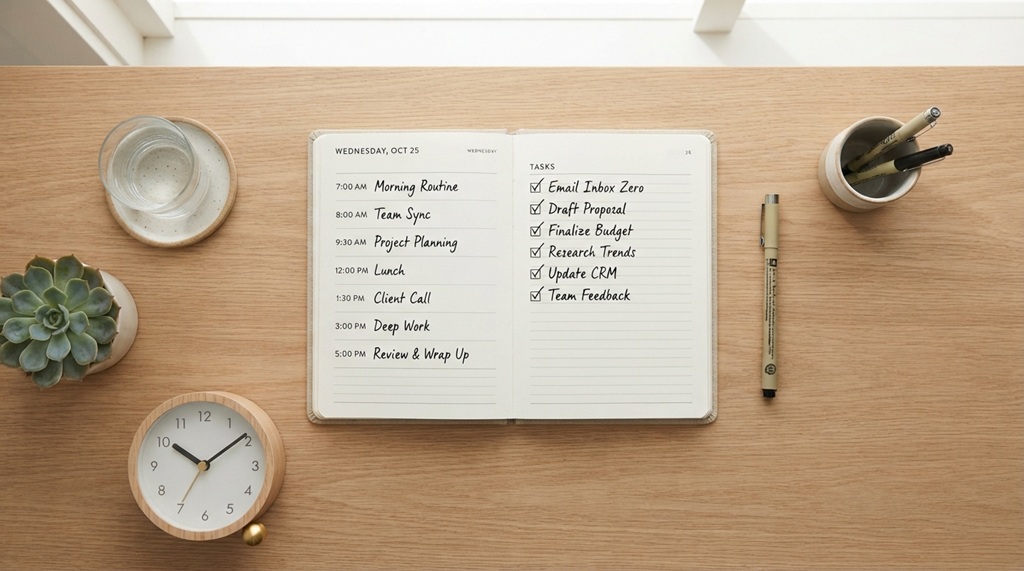
Time blocking means assigning specific hours to specific tasks. Instead of a vague to-do list, you give each task a real appointment.
Try this simple structure:
- Block 60-90 minutes for deep focus work in the morning.
- Block shorter 20-30 minute slots for emails, messages, or admin tasks.
- Leave buffer time between blocks. Life rarely goes exactly to plan.
Time blocking works because it removes the “what should I do now?” question. Your calendar already answers it.
Batch Similar Tasks Together
Switching between different types of tasks drains mental energy. Group similar tasks and do them in one sitting instead.
For example, answer all your messages at once instead of checking your phone every ten minutes. Do all your errands in one trip. This reduces the mental “reset cost” of constantly switching gears.
How to Stop Procrastinating: Practical Techniques You Can Start Today
Stopping procrastination means making the first step so small that starting feels effortless. Momentum, not motivation, gets tasks done.
The Two-Minute Start Rule
Tell yourself you only need to work on the task for two minutes. Open the document. Write one sentence. Set out your gym clothes.
This works because starting is usually the hardest part, not finishing. Once you begin, momentum often carries you further than you planned.
Break Big Tasks Into Tiny Steps
A task like “write my thesis” feels overwhelming. A task like “write the first paragraph of the introduction” feels doable.
Break every big goal into steps small enough to finish in under 30 minutes. Smaller steps lower the emotional barrier to starting, which is usually the real obstacle.
Remove Friction From Your Environment
Make starting easy and distraction hard. Put your phone in another room while you study. Close extra browser tabs. Keep your workspace ready the night before.
Small friction changes make a bigger difference than most people expect. You are not relying on willpower alone anymore. You are designing your space to support focus.
Use Deadlines and Accountability
Set your own deadlines, even for tasks without one. Tell a friend what you plan to finish and when. Public accountability, even to one person, increases follow-through.
You can also try the Pomodoro Technique: work for 25 minutes, then take a 5-minute break. This structure keeps tasks manageable and prevents burnout.
Building Automated Habits That Eliminate Daily Procrastination
Long-term time management relies on converting intentional effort into automatic routines, removing the need to burn through limited willpower every day. By embedding small, consistent actions into your daily rhythm, you build a self-sustaining system that effortlessly keeps distraction at bay and makes productivity your default state. Master this level of control over your schedule, and you will naturally unlock the space needed to maintain essential routines allowing you to easily cook basic meals easily even if you’re busy without ever feeling overwhelmed.
Create a Simple Morning Routine
Your first hour sets the tone for the rest of your day. A short, repeatable morning routine (even just 15 minutes) reduces decision fatigue and gets you moving before your brain finds excuses.
Review and Reset Weekly
Spend 10 minutes every week reviewing what worked and what did not. Ask yourself:
- Which tasks did I avoid, and why?
- What time of day was I most focused?
- What distracted me the most this week?
This weekly check-in helps you adjust your system instead of repeating the same mistakes.
Track Progress, Not Just Output
Most productivity advice focuses only on what you finished. Track your effort too. Did you start the task, even if you did not finish it? That counts as progress.
This shift matters because procrastination often returns when people feel like their effort “doesn’t count” unless the task is fully done. Recognizing partial progress keeps motivation alive.
A Different Angle: Why “Discipline” Isn’t the Real Fix

Most advice tells you to be more disciplined. But discipline is a limited resource, not a personality trait you either have or lack.
Instead of asking “how do I force myself to do this,” ask “how do I make this easier to do.” That question changes everything. It shifts your focus from willpower to design.
For example, instead of forcing yourself to study for three hours straight, design a 25-minute study block with a reward built in. Instead of relying on motivation to hit the gym, lay out your clothes the night before so there is one less decision in the morning.
Discipline fades under stress. Systems do not. Build systems, and discipline becomes far less necessary.
Frequently Asked Questions
Why do I procrastinate even when I know it will hurt me later?
Procrastination is driven by short-term emotional relief, not logic. Your brain prioritizes avoiding discomfort now over long-term consequences, even when you know better. Recognizing this pattern is the first step to interrupting it.
How long does it take to build better time management habits?
Most people notice small improvements within two to three weeks of consistent practice. Full habit formation often takes longer, sometimes a couple of months, depending on the complexity of the habit. Consistency matters more than speed.
What is the best time management method for students?
Time blocking combined with the Pomodoro Technique works well for most students. It structures study sessions while preventing burnout through built-in breaks. Test different methods and keep whatever fits your schedule and energy levels.
Can procrastination be a sign of something more serious?
Yes, in some cases. Chronic procrastination can connect to anxiety, ADHD, or depression, especially if it affects multiple areas of your life. If procrastination feels unmanageable despite trying these strategies, consider talking to a counselor or mental health professional.
Is multitasking a good way to save time?
No, research generally shows multitasking reduces both speed and quality of work. Your brain switches between tasks rather than truly doing them at once, which adds mental fatigue. Focusing on one task at a time is usually faster overall.
Conclusion
Learning to manage your time better and stop procrastinating does not require a perfect system. It requires small, repeatable actions: one clear priority each day, smaller steps for big tasks, less friction in your environment, and habits that stick even on hard days.
Start with just one strategy from this guide today. Momentum builds from action, not from waiting until you feel ready.

Leave a Reply