

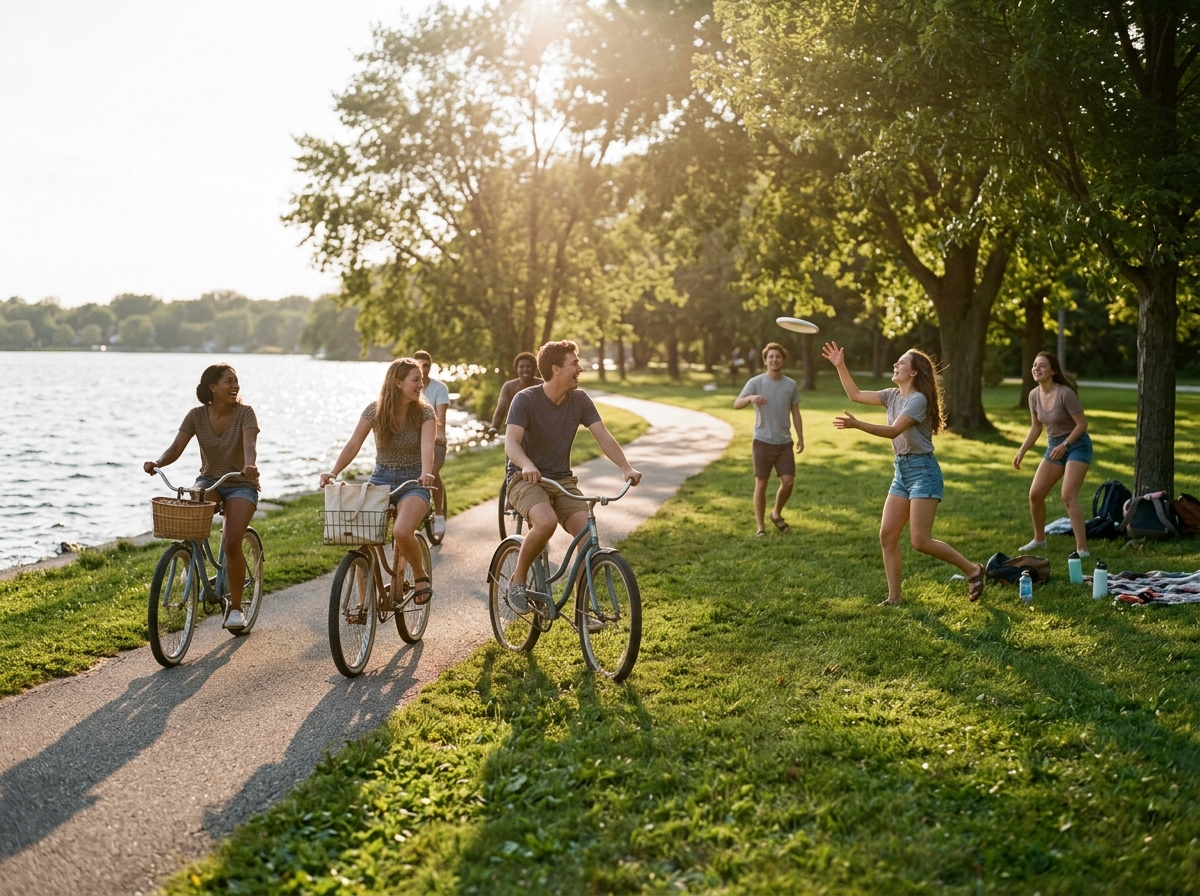
Summer weekends have a way of slipping into a predictable loop: sleep in, scroll, snack, repeat. By Sunday evening, many people feel more drained than they did on Friday. The fix isn’t a gym membership or expensive gear — it’s finding a few activities that cost almost nothing and are genuinely fun enough to repeat. Rolling around on a cheap longboard coolsurfinggear.com/best-affordable-longboards/ is one option, but it’s far from the only one. Below are ten practical ways to stay active, plus what each one actually costs, what gear matters, and where the hidden trade-offs are.
Quick Answer
The cheapest ways to stay active on summer weekends are activities that need little or no equipment: walking or hiking, bodyweight workouts in a park, swimming in public pools or open water, cycling on a used bike, and skating on an affordable longboard. Most cost under $50 to start, and the biggest factor isn’t money — it’s choosing something you’ll actually do the following weekend again.
Key Takeaways
- You can start most of these activities for under $50, and several are completely free.
- Used gear and secondhand boards or bikes often deliver better value than entry-level new equipment.
- Consistency matters more than intensity: two weekend sessions beat one exhausting one.
- Heat, hydration, and timing (early morning or late afternoon) affect safety more than fitness level does.
- Pick one or two activities to start rather than buying gear for all ten at once.
Free Activities That Require Almost No Gear
If your budget is close to zero, start here. These options rely on your body weight, public spaces, and nothing else.
1. Walking and Urban Hiking
A brisk 60–90 minute walk burns a meaningful number of calories, costs nothing, and works in almost any neighborhood. The trick is making it interesting: pick a new route each weekend, add hills, or turn it into a “destination walk” where you end at a farmers market or park. Walking is also the easiest activity to combine with friends, which raises the odds you’ll keep doing it.
2. Bodyweight Workouts in a Park
Push-ups, squats, lunges, planks, and step-ups on a park bench cover most major muscle groups. A 30-minute circuit, three rounds through, is a legitimate workout. Many public parks have pull-up bars or outdoor fitness stations, which expand what you can do without buying anything. The limitation is progression — without added resistance, you’ll eventually need harder variations (single-leg squats, archer push-ups, longer holds) to keep improving.
3. Swimming in Free or Low-Cost Water
Lakes, rivers, and some beaches are free. Public pools typically charge a small day fee, and many cities offer discounted or free swim hours at certain times. Swimming is joint-friendly and works the whole body, but safety matters: swim where lifeguards are present when possible, never alone in open water, and be honest about your ability level.
Low-Cost Gear-Based Activities
These involve a small upfront purchase, but the cost per use drops fast if you stick with them.
4. Longboarding or Cruising
A longboard is one of the most cost-effective ways to turn a flat neighborhood or boardwalk into a workout. Cruising builds balance, core stability, and leg endurance, and it doubles as transport. When buying, focus on the deck length, truck quality, and wheel hardness rather than brand hype — a decent entry-level board will feel fine for casual cruising, while very cheap boards often have stiff trucks and poor bearings that make riding frustrating. If your area has smooth pavement and gentle slopes, this is one of the highest-value options on the list.
5. Cycling on a Used Bike
A secondhand hybrid or mountain bike from a local classifieds listing often costs less than a single month of gym dues. Cycling is low-impact, covers distance quickly, and lets you explore further than walking. Budget for a helmet and a basic tune-up; those two things matter more than the bike’s original price. Avoid department-store bikes with non-replaceable parts if you plan to ride regularly.
6. Pickleball or Tennis on Public Courts
- Pickleball paddles and balls are inexpensive, and public courts are usually free.
- Tennis requires a slightly higher upfront cost, but used rackets are widely available.
- Both sports are social, which helps with consistency.
- Court availability, not cost, is usually the real constraint.
7. Rollerblading or Roller Skating
Inline skates provide an excellent low-impact cardio workout. Entry-level skates cost less than most fitness classes, and once you own them, every session is free. The learning curve is steeper than cycling, so plan a few short sessions on smooth, flat pavement before attempting distance or hills. Wrist guards and a helmet are worth the small extra cost.
Free Movement Practices You Can Do Anywhere
8. Yoga or Mobility Sessions at Home or in a Park
Free guided sessions exist on YouTube and through many public library or community programs. A 30-minute flow improves flexibility, balance, and recovery from other activities. The only real cost is a mat, and even that is optional on grass or sand. The limitation is motivation — it’s harder to stay consistent without a class or a partner.
9. Trail Running or Hiking
If you already own running shoes, trail running is free. Hiking costs only transportation to the trailhead. Both deliver strong cardiovascular and leg-strength benefits. Start with shorter, flatter trails and build up; summer heat makes overestimating your endurance easy.
10. Beach or Park Volleyball
Public nets are common at beaches and parks, and pickup games are usually open to newcomers. A basic ball is the only purchase. Volleyball mixes cardio, jumping, and social interaction, which makes it easy to play for an hour without noticing the effort.
How These Options Compare
| Activity | Typical Startup Cost | Best For | Main Limitation |
|---|---|---|---|
| Walking / hiking | $0 | Anyone, any fitness level | Low intensity unless you add hills or pace |
| Bodyweight workouts | $0 | Strength and convenience | Limited progression without added resistance |
| Swimming | $0–small day fee | Full-body, joint-friendly exercise | Requires water access and safety awareness |
| Longboarding | Low | Balance, core, fun transport | Needs smooth pavement; steeper learning curve |
| Used cycling | Low–moderate | Distance, low-impact cardio | Maintenance and storage |
| Pickleball/tennis | Low | Social, interval-style play | Court availability |
| Rollerblading | Low | Cardio and leg strength | Learning curve; surface dependent |
| Yoga/mobility | $0–low | Flexibility and recovery | Requires self-discipline |
| Trail running / hiking | $0 | Cardio and scenery | Heat and terrain risk |
| Volleyball | $0–low | Social, explosive movement | Needs a group and a net |
Common Mistakes That Waste Money and Motivation
The biggest mistake is buying gear for an activity you haven’t tried yet. Buy the cheapest workable version first, confirm you enjoy it, then upgrade. A second common mistake is going too hard on the first weekend — soreness and heat exhaustion kill momentum. Finally, don’t ignore timing: in most regions, mid-afternoon summer heat is the worst window for intense activity, so aim for early morning or evening.
How to Choose the Right Activity for You
Ask three questions. First, what’s your realistic budget for the next month? Second, do you prefer solo time or group energy? Third, what’s physically accessible near you — water, trails, courts, or smooth pavement? The answers usually narrow ten options down to two or three. Start with one free activity and one gear-based activity, and give each at least three weekends before deciding whether to keep it.
Frequently Asked Questions
What is the cheapest way to stay active on summer weekends?
Walking, bodyweight workouts, and hiking are essentially free and require no equipment. If you want something more recreational, a used bike or an affordable longboard offers a low cost per use over time.
Is longboarding a good workout?
Yes. Cruising engages your legs, core, and balance, and longer rides raise your heart rate. It’s less intense than running but easier on the joints, which makes it a good complement to other activities.
How much should I spend on a first longboard?
You don’t need a premium board to start. Focus on a stable deck, functional trucks, and wheels suited to your surface. Very cheap boards often have poor components that make learning harder, so aim for a mid-range entry-level option rather than the absolute lowest price.
Can I stay active outdoors in hot weather safely?
Yes, with precautions. Exercise early or late, drink water before and during activity, wear light clothing, and take breaks in shade. Stop immediately if you feel dizzy, nauseated, or unusually weak.
Do I need special shoes or gear for these activities?
Only where safety requires it. Helmets for cycling, skating, and longboarding, wrist guards for skating, and supportive shoes for walking or hiking are the main essentials. Everything else can wait until you know you’ll stick with the activity.
How often should I do these activities to see results?
Two to three sessions per week is a reasonable starting point for most people. Consistency over months matters far more than intensity in any single session.
Conclusion
Staying active on summer weekends doesn’t require spending much. Walking, bodyweight workouts, swimming, and hiking cost little or nothing, while a used bike or an affordable longboard adds variety for a small upfront investment. The real decision is picking one or two options that fit your budget, your environment, and your preference for solo or social activity — then repeating them often enough to build momentum. Start free, add gear only when you’ve confirmed you enjoy it, and adjust for heat and hydration as the season goes on.

Leave a Reply