

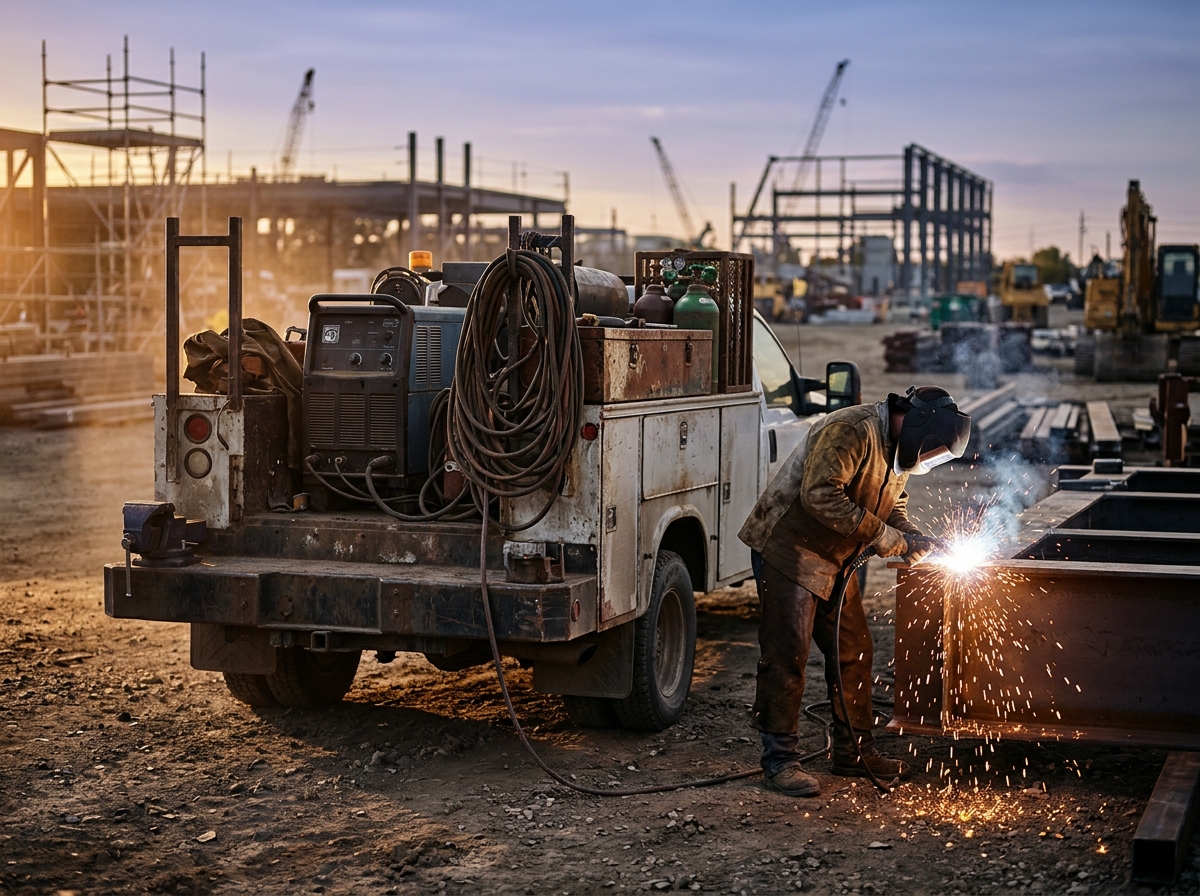
Starting a mobile welding business means equipping a truck or van as a rolling workshop, getting licensed and insured for on-site work, and pricing your services around real arc hours rather than guesswork. According to industry guides from specialized fabricators like Architect Design Welding //architectdesignwelding.com/, most operators spend between fifteen thousand and fifty thousand dollars getting their rig road-ready. Once set up, a solid mobile welder can realistically earn over a hundred thousand dollars a year working repair jobs, farms, and construction sites.
What Makes Mobile Welding Different From Shop Welding
A mobile welding business brings the shop to the customer instead of asking customers to haul broken equipment to you. This matters most for farms, construction sites, and marine operators who can’t easily transport heavy machinery.
Because you’re working on-site, every cost that a shop treats as fixed overhead becomes a variable job expense. Fuel, generator run time, and consumables all shift directly into your pricing. This also means your truck itself becomes your single biggest asset, so choosing the right rig setup matters enormously from day one.
Get Qualified Before You Buy Anything
Skills come first, since no amount of equipment fixes a weak weld. Most successful mobile welders hold formal certification before going independent, even though it isn’t always legally required.
Certification builds trust fast with commercial clients who won’t risk a job on an unproven welder. Beyond raw welding skill //architectdesignwelding.com/types-of-welding/how-learn-tig-welding-basics-clean-joints/, you’ll also need basic safety training covering fire prevention, gas cylinder handling, and job site hazard awareness. Clients working in oil fields, pipelines, or industrial plants often require proof of specific safety certifications before they’ll even let you on-site.
Choose Your Business Structure And Register
Register your mobile welding business the same way any trade business gets set up, starting with a legal structure. Most welders choose an LLC, since it separates personal assets from business liabilities if a job goes wrong.
After forming your LLC, register your business name with your state and apply for a federal tax ID number. Open a dedicated business bank account right away, since mixing personal and business funds makes tax season painful and muddies your actual profit picture.
Secure The Right Licenses And Permits
Licensing requirements shift depending on your city, county, and the type of welding you plan to do. A general business license from your city or county clerk is the baseline requirement almost everywhere, often costing between fifty and four hundred dollars annually.
Hot Work Permits
Because you’re welding outside a permanent shop, many jurisdictions require a hot work permit for each job site or on an annual basis. This permit typically runs around a hundred dollars a year and confirms you understand fire safety protocols for welding in uncontrolled environments.
Contractor Licensing
If you plan to take structural welding jobs on construction sites, check your state’s contractor licensing board before bidding on work. Some states require a specific trade license that can take several weeks to process, so apply well before you need it.
Set Up Your Mobile Welding Rig
Your truck or van isn’t just transportation; it’s your entire mobile shop rolled into one vehicle. Budget carefully here, since this single purchase often represents your largest startup expense.
A reliable used work truck typically runs between ten thousand and twenty-five thousand dollars, while a fully outfitted rig can climb past fifty thousand. Your core equipment list should include:
- An engine-driven welder capable of handling stick, MIG, and TIG processes
- An air compressor paired with pneumatic grinders for cleanup and fit-up work
- Oxygen and acetylene torches for cutting and heating applications
- A generator sized to run your welder and tools independently of shore power
- Secure storage for gas cylinders, consumables, and hand tools
An underpowered setup limits which jobs you can realistically take, so invest in a capable welder and compressor from the start rather than upgrading twice.
Secure Proper Insurance Coverage
Skipping insurance on a mobile operation is riskier than running a fixed shop, since you’re constantly driving to unfamiliar job sites. Commercial auto insurance is mandatory for your work truck and typically costs between fifteen hundred and thirty five hundred dollars annually.
General liability insurance protects you if a client’s property gets damaged or someone gets injured during a job. Ask your insurer about an inland marine policy too, since it covers your welding equipment and tools while they’re in transit or sitting unattended at a job site. Some industrial clients, especially pipeline and oil field operators, won’t let you start work until you can prove a specific liability coverage amount.
Price Your Jobs Around True Arc Hour Costs
Pricing mobile welding work by the hour sounds simple until you account for everything surrounding actual trigger time. Setup, tacking, grinding, drive time, and loading the rig all eat into a job before you ever strike an arc.
Hourly rates for mobile welders commonly cluster between sixty and one hundred thirty dollars, with wider regional ranges running from fifty to one hundred fifty. Before setting your rate, calculate your true cost per arc hour, factoring in shielding gas, wire or rod consumption, and equipment wear. A cylinder of shielding gas delivering around six arc hours might add ten dollars per hour in gas cost alone, and wire or rod consumption adds more on top of that.
Many mobile welders also charge a flat minimum fee just to show up, often between fifty and two hundred dollars, covering fuel and the base cost of mobilizing your rig. Structural and rig welding work tends to command the highest rates, often starting around seventy-five dollars an hour before travel and per diem.
Find Your First Clients
Early on, your network and local visibility matter more than any paid advertising campaign. Farms, construction companies, and equipment repair shops are reliable starting points for steady mobile welding work.
Effective ways to land your first jobs include:
- Listing your business on Google Maps so local searches for mobile welding find you
- Networking directly with construction companies who need subcontracted welding support
- Wrapping your work truck with visible branding, turning every job site into free advertising
- Asking satisfied customers for reviews, since word of mouth carries serious weight in this trade
- Reaching out to marine equipment suppliers, who often need reliable welding subcontractors
Pipeline and oil field work can pay significantly more once you build the right connections, sometimes combining a base hourly rate with an additional truck rental fee and per diem.
Manage Cash Flow And Consumable Costs
Mobile welding businesses face unique cash flow pressure since consumables get used up before a client invoice gets paid. Wire, rods, grinding discs, and shielding gas all need replacing constantly, and these costs hit your wallet immediately.
Track your cost per arc hour closely so a seemingly profitable hourly rate doesn’t quietly erode once consumables and fuel are subtracted. Build a cash reserve covering at least a few weeks of operating expenses, so a slow stretch between jobs doesn’t force you to delay restocking supplies.
Final Thoughts
Starting a mobile welding business rewards welders who treat the truck like a business asset, not just a toolbox on wheels. Get licensed, insured, and properly equipped before chasing your first job, then price every quote around your real cost per arc hour. From there, consistent local networking and a reliable rig will keep steady work coming your way. If you’re ready to get moving, start outfitting your rig and apply for your hot work permit today.
Frequently Asked Questions
How much does it cost to start a mobile welding business?
Startup costs typically range from fifteen thousand to fifty thousand dollars, depending on your truck and equipment choices.
How much can a mobile welder make per hour?
Mobile welders commonly charge $60 to $130 an hour, with rig and pipeline work often paying more.
Do I need a special permit for mobile welding jobs?
Yes, most areas require a hot work permit for welding performed outside a permanent shop location.
What equipment do I need for a mobile welding rig?
A capable truck needs an engine-driven welder, air compressor, cutting torches, a generator, and secure storage for gas cylinders and tools.
Is mobile welding more profitable than shop welding?
Mobile welding can pay more per hour, but higher fuel, consumable, and vehicle costs eat into those extra earnings.

Leave a Reply