

Basic car wheel maintenance every owner should know comes down to a handful of checks you can do in your driveway. Yet many drivers only think about their wheels when a tire looks flat. A quick look at //tradecarhub.com/ shows how much of vehicle upkeep starts at the wheel. This guide covers the simple, repeatable habits that keep wheels safe, tires lasting longer, and repair bills smaller. You do not need a lift or special tools to start.
Quick answer: Check tire pressure monthly when tires are cold, inspect tread depth and sidewalls, and rotate tires every 6,000 to 8,000 miles. Torque lug nuts to the manufacturer’s spec and keep wheels clean. These few habits prevent most common wheel problems.
What is basic car wheel maintenance every owner?
Basic car wheel maintenance every owner should perform is the set of routine checks and small tasks that keep wheels and tires in safe working condition. It is not a mechanic’s job. It is the owner’s job, done between professional services, and it takes minutes rather than hours. The work falls into four groups: pressure, tread and condition, hardware, and cleanliness.
Tire pressure and tread depth
Pressure is the easiest measurement and the one with the biggest effect. Tires lose roughly one pound per square inch (psi) per month under normal conditions, and cold weather lowers pressure further. Check with a good gauge when tires are cold, meaning the car has sat for at least three hours or been driven under a mile. Compare the reading to the placard inside the driver’s door jamb, not the number molded on the tire sidewall. That sidewall figure is a maximum, not a target.
Tread depth determines whether the tire can grip in rain. A simple check: insert a coin into the tread groove. If the rubber does not reach a consistent depth across the tire, it is time to shop. Measured with a gauge, most tires start at around 10/32 of an inch and become marginal near 4/32. At 2/32 they are legally worn out in most places.
Lug nuts, wheel hardware, and cleaning
Lug nuts hold the wheel to the car. They should be checked after any tire change, and re-torqued after roughly 50 miles of driving on a newly installed wheel. Use a torque wrench set to the owner’s manual figure; guessing with a lug wrench invites both loose wheels and stretched studs. Brake dust and road salt attack wheel finishes, so a monthly wash with mild soap and a soft brush keeps rims from pitting over the years.
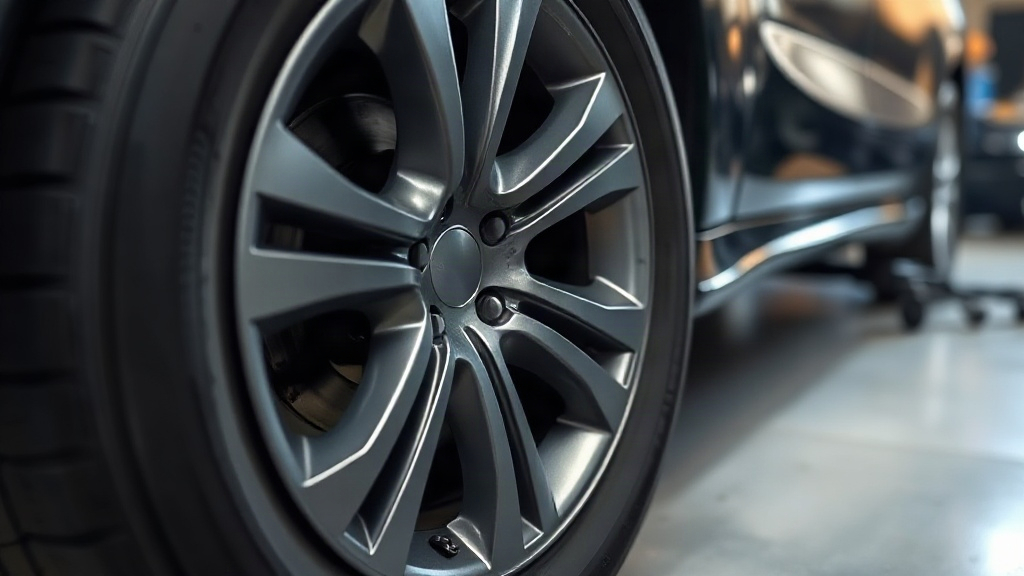
Understanding the parts of a wheel helps here, because you will know which surfaces to clean and which fasteners to inspect.
Takeaway: Four checks, one habit: pressure, tread, hardware, and cleanliness cover the core of wheel care.
Why basic car wheel maintenance every owner matters
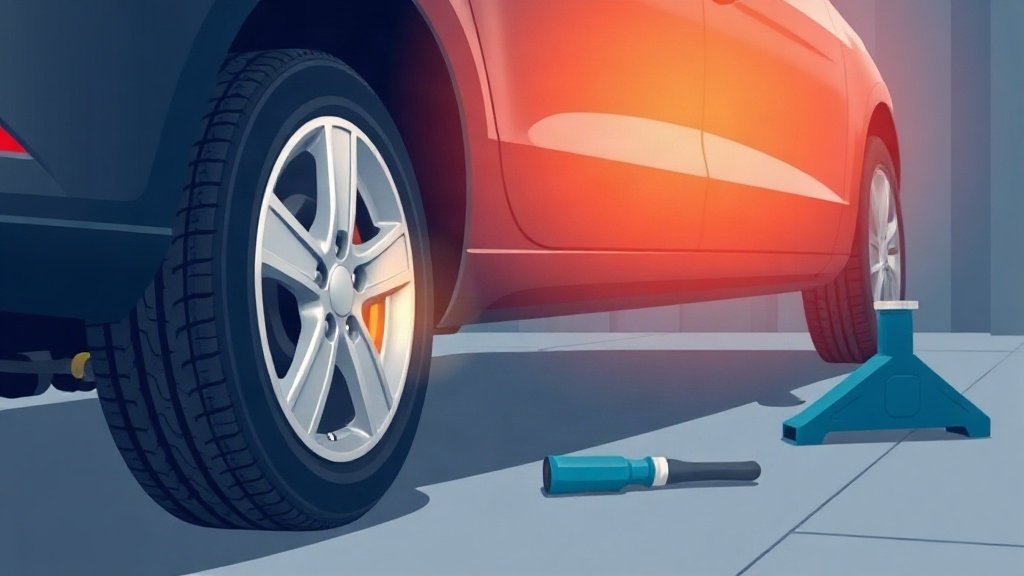
Wheels are the only part of the car that touches the road, so every handling and braking input passes through them. A tire that is 25 percent underinflated flexes more, runs hotter, and wears faster at the edges. It also raises fuel consumption, because the engine works against higher rolling resistance. A tire that is overinflated rides harshly and wears in the center.
Correct pressure also protects the suspension and steering components. An underinflated tire transmits more shock and vibration through the struts, bushings, and tie rods, accelerating wear on parts that cost far more to replace than a set of tires. Balanced, properly inflated wheels keep the ride smooth and the steering precise, so the whole car feels and handles better between services.
Safety and stopping distance
Grip depends on contact patch and tread. Worn tires hydroplane sooner on wet roads, and a blowout at highway speed is far harder to control than a slow leak caught early. Inspecting sidewalls for bulges, cracks, or embedded objects is the single best way to spot a tire heading toward failure before it happens.
Cost and longevity
Tires are among the more expensive consumables on a car. Rotating them on schedule spreads wear evenly, and a set that is cared for can deliver its full rated life. Neglect shortens that life and can damage the rim itself. A curb strike that bends a wheel may cost a repair or replacement, while a slow leak from a corroded valve stem is a cheap fix caught early.
A soft tire deforms more with every rotation. That wastes energy, so fuel economy drops quietly, week after week.
Takeaway: A few minutes of checking protects your safety and your wallet at the same time.
Best practices
Keep a written log, either in a notebook in the glovebox or a note on your phone, recording the date, mileage, and pressure at each check. The log reveals slow leaks, seasonal trends, and how close you are to the next rotation without guesswork. If one tire consistently reads lower than the others, the record makes that pattern obvious and points a technician straight to the culprit.
Set a simple monthly routine
Pick one day a month, ideally the same one, and run through the checks in order. Start with pressure on all four tires plus the spare, then tread, then a visual scan of each sidewall for damage. Finish with a quick look at lug nuts and a rinse of brake dust. The whole routine fits in fifteen minutes with a gauge, a rag, and a flashlight.
Rotate tires on schedule and torque correctly
Rotate tires every 6,000 to 8,000 miles, which usually lines up with an oil change or two. Modern tires often benefit from a front-to-back swap pattern rather than a full cross, so check your manual or the tire maker’s guidance. Always re-torque after the swap and again after about 50 miles.
Match pressure to the season
Pressure falls with temperature, roughly one psi for every 10°F drop. A tire that was fine in September may look low in November without any leak at all. Check monthly through seasonal changes and top up before long trips. When adding air, inflate to the door placard figure, never the sidewall maximum.
Clean and inspect together
Wash wheels when you wash the car. It removes the brake dust that etches clear coat and lets you see cracks or bends you would otherwise miss. A soft brush and mild soap protect painted and alloy finishes; skip harsh acid cleaners on coated rims.
A tire gauge, a torque wrench, and a rag in the trunk make monthly checks easy, and they cost far less than one premature tire.
Takeaway: Consistency beats intensity: a fixed monthly routine and a rotation schedule do most of the work.
Common mistakes to avoid
Do not ignore the manufacturer’s torque sequence. Lug nuts should be tightened in a star or crisscross pattern, in stages, rather than one nut taken all the way to spec before the others. Tightening in a circle or all at once can seat the wheel crookedly, which leads to vibration and uneven clamping force even when every nut reads correct on the wrench. Hand-thread each nut first to avoid cross-threading, and never lubricate studs unless the manual explicitly calls for it, since oil on the threads changes the torque reading.
Ignoring the spare and the valve stems
The spare tire loses pressure just like the ones on the road, and it often sits unchecked for years. Add it to your monthly check. Valve stems are another quiet failure point; a cracked rubber stem leaks slowly. Ask for new stems whenever tires are replaced.
Over-tightening or guessing torque
Many drivers tighten lug nuts until they feel "very tight." That can stretch the studs or warp a brake rotor. A torque wrench set to the manual’s number takes seconds and prevents both problems. Re-torque after 50 miles on a fresh wheel, every time.
Skipping the fine print on wear
A tire can look fine on the outside and still have an issue: uneven wear means alignment or suspension work is due, and a bulge in the sidewall means the tire must come off, not be patched. Check tread at three points across the width so a worn inner edge does not escape notice.
Treating pressure as a one-time task
Pressure changes with temperature and time, so a single check per season is not enough. Monthly checks, before long drives, catch leaks early.
| Mistake | Consequence | Fix |
|---|---|---|
| Ignoring the spare | Flat spare when needed | Check monthly |
| Guessing torque | Stretched studs, warped rotors | Use a torque wrench |
| Skipping the inner edge | Hidden uneven wear | Check three points |
Takeaway: Most wheel trouble starts with a check that was skipped, not a part that suddenly failed.
FAQ
How often should I check tire pressure?
Once a month, when tires are cold, plus before any long trip. Cold means the car has sat for three hours or been driven under a mile. Monthly checks catch slow leaks early and adjust for seasonal temperature changes.
Can I skip tire rotation if the tread looks fine?
No. Rotation spreads wear before it becomes visible, so it extends the life of the whole set. Follow the 6,000 to 8,000 mile interval in your manual.
Is it safe to drive on a tire with a sidewall bulge?
No. A bulge signals internal damage. The tire should be replaced, not patched, and you should not drive at highway speed on it.
Do I need a torque wrench at home?
Yes, for anything beyond a quick visual check. A torque wrench costs little compared with the parts it protects, and it takes seconds to use.
How long do tires last with regular care?
Most tires reach the end of their useful tread somewhere around 40,000 to 60,000 miles, though driving style and road conditions vary widely. Rotation and correct pressure help you reach the upper end of your tire’s potential.
Conclusion
Wheel care rewards a simple routine: check pressure monthly when cold, watch tread and sidewalls, rotate on schedule, and torque lug nuts to spec. Those habits keep you safe on wet roads, stretch the life of expensive tires, and catch small problems before they become big bills. Set a reminder for the first of the month and start with a tire gauge today; it is the easiest habit that protects everything else.

Leave a Reply