

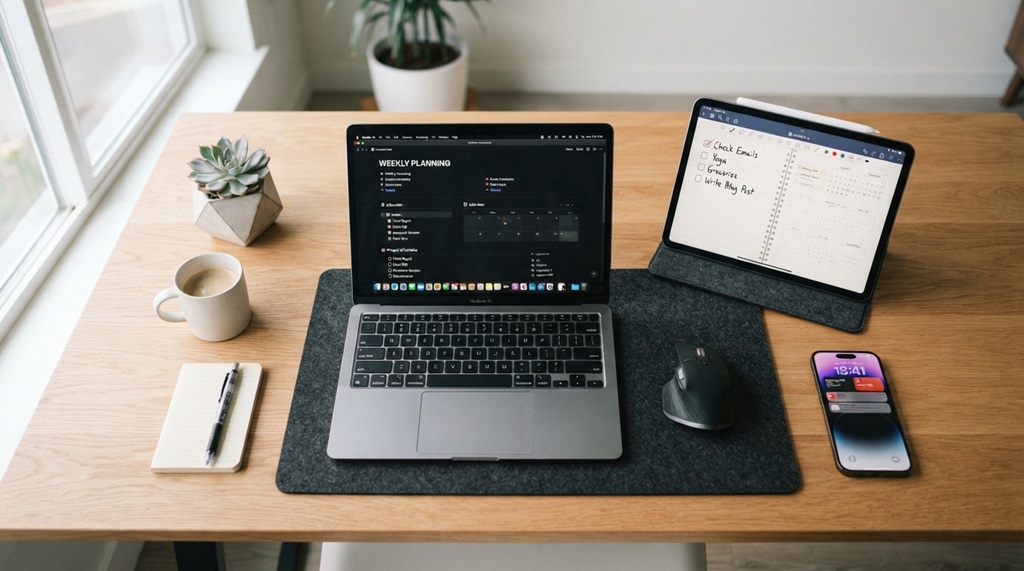
Testing productivity apps the right way means using a short trial period, real tasks, and clear criteria not just downloading and hoping for the best. Most people try an app for one day, get bored, and quit. That’s not a real test. It’s a guess.
You don’t need to try fifty apps to find the right one. You need a simple system. This guide gives you that system, step by step.
By the end, you’ll know exactly how to test any productivity app in about a week and decide if it earns a permanent spot on your phone.
Why Most People Fail at Testing Productivity Apps

Most people fail because they judge an app by its looks, not its function. A clean design feels good in the first five minutes. But it doesn’t tell you if the app fits your daily routine.
Here are the three most common mistakes.
Mistake 1: Testing With Fake Tasks
Many people create a test to-do list just to try the app. This doesn’t work. Fake tasks don’t carry real pressure. You need to test with your actual work, your actual deadlines, and your actual stress.
Mistake 2: Quitting Too Early
A new app feels awkward at first. That’s normal. Your brain needs time to build a new habit. Quitting after one day tells you nothing about long-term fit.
Mistake 3: Ignoring the Setup Cost
Some apps look powerful but take hours to configure. If setup eats your whole week, the app fails the real test: does it save you time?
Step-by-Step: How to Test a Productivity App Properly
A proper test has five clear steps. Follow them in order, and you’ll get a real answer instead of a guess.
Step 1: Define Your Core Problem First
Before you open any app, write down the one problem you want to solve. Are you forgetting tasks? Losing focus? Missing deadlines? Name it in one sentence.
This single sentence becomes your filter. Every feature you test should connect back to it.
Step 2: Pick Two or Three Apps, Not Ten
Choose two or three apps that claim to solve your specific problem. Testing ten apps at once splits your attention. You’ll end up comparing app names instead of results.
Step 3: Run a 7-Day Real-World Trial
Use each app for seven full days with your real tasks. Seven days covers a full week of work, including your busiest and slowest days. This gives you a fair sample of how the app performs.
Step 4: Track Three Simple Metrics
During your trial, track these three things:
- Time spent inside the app (too much time managing tasks defeats the purpose)
- Number of tasks actually completed (not just added)
- How you feel using it (frustrated, calm, motivated)
Write these down daily. A quick note takes thirty seconds and gives you real data by day seven.
Step 5: Score Each App Against Your Original Problem
Go back to the one-sentence problem from Step 1. Ask yourself: did this app solve it? Score each app from 1 to 10. The highest score wins your permanent spot.
Key Features to Evaluate Before Committing
Selecting the right tool requires prioritizing daily utility over flashy demo features that rarely translate to real-world efficiency. A disciplined testing framework keeps you grounded in your actual workflow demands, ensuring you evaluate core functionality rather than marketing hype. Applying this same rigorous scrutiny across all digital investments whether you are auditing daily tools or learning how to choose the best online course without getting scammed helps you bypass superficial claims, protect your time and money, and secure solutions that deliver long-term value.
Ease of Adding Tasks
If adding a task takes more than ten seconds, you’ll stop using the app. Speed matters more than fancy input options.
Reminder and Notification Quality
Test how the app reminds you of deadlines. Too many notifications feel like noise. Too few mean you forget things anyway. Find the balance that works for your brain.
Cross-Device Sync
Check if your tasks show up correctly on your phone, tablet, and computer. According to industry experts, sync failures are one of the top reasons people abandon productivity tools.
Offline Access
Test the app without internet for at least one day. Life happens on planes, subways, and in areas with weak signal. An app that breaks offline breaks your trust in it.
A Genuinely Useful Tip Most Guides Skip: The “Bad Day” Test

Here’s an angle most articles miss: test the app on your worst day, not your best one.
Open the app when you’re tired, distracted, or overwhelmed. This is when you actually need productivity tools the most. If the app still feels simple and calming on a bad day, it passes the real test.
Apps that only work well when you’re already organized and motivated aren’t doing their job. The best productivity app supports you when your willpower is lowest, not when it’s highest.
Red Flags That Mean an App Isn’t Right for You
Some warning signs show up fast if you know what to look for. Watch for these during your trial week.
- You dread opening the app each morning
- You spend more time organizing than doing actual work
- The app crashes or lags on your device
- You need a tutorial video for basic actions after day three
- Your task list feels messier than it did before
Any one of these on its own might not be a dealbreaker. But two or more together usually mean it’s time to move on.
FAQ
How long should I test a productivity app before deciding?
Seven days gives you a solid, realistic sample. This covers your full weekly routine, including busy and slow days. Shorter tests often miss real patterns in how you actually use the app.
Should I pay for premium features before testing?
No. Test the free version first. Most productivity apps offer enough free features to judge the core experience. Only upgrade once you know the app fits your workflow.
Can I test more than one app at the same time?
You can, but it’s not ideal. Running two apps together can confuse your task list and split your habits. If you must compare two, alternate by day instead of running both at once.
What if no app feels like a perfect fit?
That’s common, and it’s okay. Combine features you like from two apps, or simplify further with a plain notes app and calendar. Sometimes less structure works better than more.
Does app design really matter, or just function?
Design matters, but only after function. A beautiful app you don’t use daily is worse than a plain app you open every morning. Function should always come first in your test.
Conclusion
Testing productivity apps doesn’t need to be complicated. Define your problem, pick a few strong candidates, run a real seven-day trial, and track how each one actually performs. Add the “bad day” test for a result you can trust.
The right app won’t just look good. It will quietly make your days easier, even when things feel hard. Follow this process once, and you’ll never have to guess again.

Leave a Reply