

Yes, you can start a business from scratch on a small budget even with a few hundred dollars, a laptop, and a clear plan. The key is skipping the expensive “startup extras” (fancy offices, logo designers, business coaches) and focusing only on what actually gets your first customer to pay you. This guide breaks down exactly how to do that, step by step, without pretending you need a trust fund to begin.
If you’re a young adult staring at your bank account wondering how anyone builds a business without rich parents or a bank loan, you’re not alone. Most successful founders didn’t start with big money they started with a specific problem they could solve cheaply, and they figured out the funding as they went.
This article walks you through the real, practical process: choosing an idea that doesn’t require capital, validating it before you spend a dime, and building momentum using free or nearly-free tools. No fluff, no “just believe in yourself” filler just a workable roadmap.
Choose a Business Idea That Requires Little to No Upfront Money

The fastest way to start on a small budget is to pick a business model where your skills, time, or existing tools do the heavy lifting instead of cash. This usually means service-based or digital businesses rather than ones requiring inventory, equipment, or a physical location.
Service-Based Ideas Are the Cheapest Entry Point
Freelance writing, social media management, virtual assistance, tutoring, graphic design, bookkeeping, or event coordination all require little more than a laptop and internet access. You’re selling your time and skill, not a product you have to manufacture or stock.
Digital Products Scale Without Inventory Costs
Ebooks, templates, online courses, printables, and stock photography can be created once and sold repeatedly with no shipping, storage, or restocking costs. The upfront investment is your time, not your wallet.
Reselling and Light-Inventory Models
If you want to sell physical products, start small: thrifted clothing resale, print-on-demand merchandise, or dropshipping let you test what sells before committing money to bulk inventory. You only pay for a product once someone has already bought it from you.
Validate the Idea Before You Spend Any Money
Validation means confirming real people will pay for your idea before you invest time or cash building it out. Skipping this step is the single biggest reason new businesses waste their limited budget.
Start by talking to 10–15 people in your target audience not friends and family who will just tell you what you want to hear, but actual potential customers. Ask what they currently do to solve the problem your business addresses, and whether they’d pay for a better solution. If you can, ask for a small pre-order, deposit, or “yes, I’d buy this” commitment in writing (even a DM counts).
You can also test demand with a simple landing page or social media post describing your offer before it fully exists. If people click, comment, or ask “how do I sign up,” you have a signal worth building on. If there’s silence, you’ve saved yourself from spending your limited budget on something nobody wants.
Crafting a High-Impact, Lean Business Framework
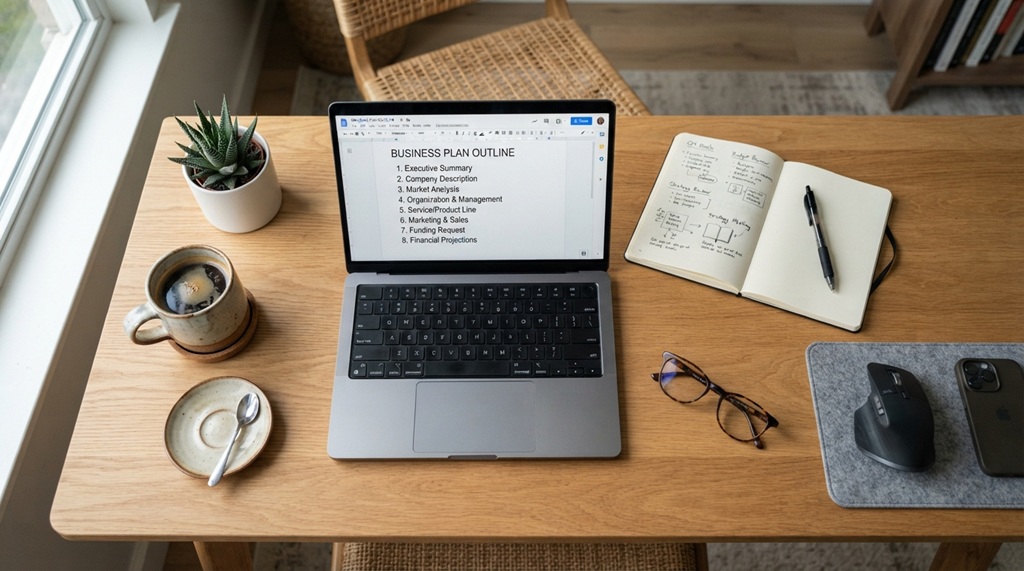
A successful launch does not demand a exhaustive 40-page dossier; a streamlined, single-page strategic framework is often far more effective for sharpening your focus and keeping early expenditures strictly aligned with essential priorities. As you refine your core model on a minimal budget, establishing a commanding visual identity becomes a primary growth lever. Mastering high-end visual storytelling in-house allows you to capture customer attention immediately or even expand your enterprise by exploring start a product photography business to serve other ambitious brands using basic, foundational camera gear.
Define Your Offer, Customer, and Price in One Page
Write down exactly what you’re selling, who it’s for, what problem it solves, and what you’ll charge. This single page becomes your reference point every time you’re tempted to spend money on something that doesn’t directly serve those four elements.
Map Your Minimum Viable Costs
List only the expenses required to make your first sale: a domain name, a payment processor, basic materials, or a platform fee. Separate “needed now” from “nice to have later” things like custom branding, paid ads, or premium software usually belong in the second category when you’re just starting out.
Fund Your Startup Without Traditional Loans
Most young adults starting on a small budget don’t need a bank loan they need to reduce costs, use what they already have, or bring in a small amount of outside cash strategically.
Bootstrap With Personal Savings and Existing Tools
Use what you already own: your current laptop, phone, free design software, and existing social media accounts. According to industry experts, the majority of small businesses in the U.S. are started with personal savings rather than external financing, which shows that a large loan is rarely the actual barrier to starting.
Consider Micro-Funding Options
Small business grants for young entrepreneurs, local community development funds, and crowdfunding platforms can provide a modest cash injection without giving up ownership or taking on debt. Research options specific to your city, state, or country, since availability varies widely by region.
Generate Startup Cash With a Pre-Launch Offer
One angle many guides skip: instead of waiting until your business is “ready,” sell a limited number of spots, sessions, or products before you fully build the offer. This is sometimes called a “pilot cohort” or “founding customer” approach you deliver the first version personally and use that income to fund improvements, tools, or inventory for the next round of customers. It flips the funding problem: instead of asking others to invest in your idea, you get your first customers to fund it for you.
Use Free and Low-Cost Tools to Get Operational

You don’t need paid software to run a functioning business in its early stages most of what you need has a capable free version.
- Website/landing page: free tiers on website builders let you launch a basic site before upgrading
- Payments: free-to-set-up payment processors that only charge a small fee per transaction, so there’s no upfront cost
- Design: free design tools cover logos, social posts, and marketing graphics without hiring a designer
- Accounting: a simple spreadsheet is enough to track income and expenses in the first several months
- Marketing: organic social media posting, local community groups, and word-of-mouth referrals cost nothing but time
The goal in the first few months isn’t a polished, fully-loaded tech stack it’s proving the business works. Upgrade tools only when the free version is genuinely limiting your ability to serve customers or grow.
Market Your Business Without an Advertising Budget
Paid ads aren’t necessary to get your first customers direct outreach, community presence, and content usually work faster when you have no ad budget at all.
Start with people who already know you: past coworkers, classmates, and social media followers, letting them know specifically what you now offer (not a vague announcement, but a clear “I help X do Y”). Join online communities and local groups where your target customer already spends time, and contribute helpful answers before ever mentioning your business trust built this way converts better than a cold pitch.
Content marketing, like short-form videos, blog posts, or social media tips related to your niche, builds visibility over time without spending money, though it requires consistency rather than a one-time post. Referral incentives offering existing customers a discount or bonus for referring someone also cost you nothing upfront since you only pay out after a new customer actually buys.
Manage Cash Flow So Your Small Budget Lasts
Protecting the limited money you start with matters just as much as earning more, especially in the first six to twelve months.
Separate your personal and business money as early as possible, even with a basic free bank account, so you always know exactly how much your business has versus what’s yours personally. Reinvest early profits back into the business before paying yourself a full “salary,” and track every expense so you can see clearly what’s actually generating revenue versus what’s just costing you money out of habit or hope.
Frequently Asked Questions
How much money do I actually need to start a small business?
Many service-based or digital businesses can start with under $200–$500 for basics like a domain, payment processing, and minimal supplies. The exact amount depends on your business model — physical product businesses typically need more upfront than service or digital ones.
Can I start a business with no money at all?
It’s possible with pure service-based models where you sell your time and skills using tools you already own, such as your phone or laptop. You’ll still likely need a small amount for things like a business email or payment setup, but it can often be under $50.
Do I need a business license to start small?
It depends on your location and business type, but many freelancers and small online sellers can legally start before formal registration, then register once revenue justifies it. Check your local government’s small business resources to confirm what’s required where you live before assuming you’re covered either way.
How long does it take to become profitable on a small budget?
Timelines vary widely, but many small, low-overhead businesses can become profitable within the first few months since their costs are already low. Profitability comes faster when your expenses stay minimal and your first customers are secured through validation before you build anything.
What’s the biggest mistake young entrepreneurs make with a limited budget?
Spending money on branding, offices, or tools before confirming anyone will actually pay for the offer. Validating demand first protects your limited budget from being spent on things that don’t directly lead to a sale.
Conclusion
Starting a business from scratch on a small budget comes down to sequencing: pick a low-cost idea, validate it before spending, fund it lean, use free tools, and market through relationships instead of ads. None of this requires a large sum of money it requires discipline about what you spend on and when. Start with the smallest possible version of your idea, get it in front of real customers, and let their response and their money guide what you build next.

Leave a Reply